The Earthscape journal
How Landscape Lighting Elevates Outdoor Living
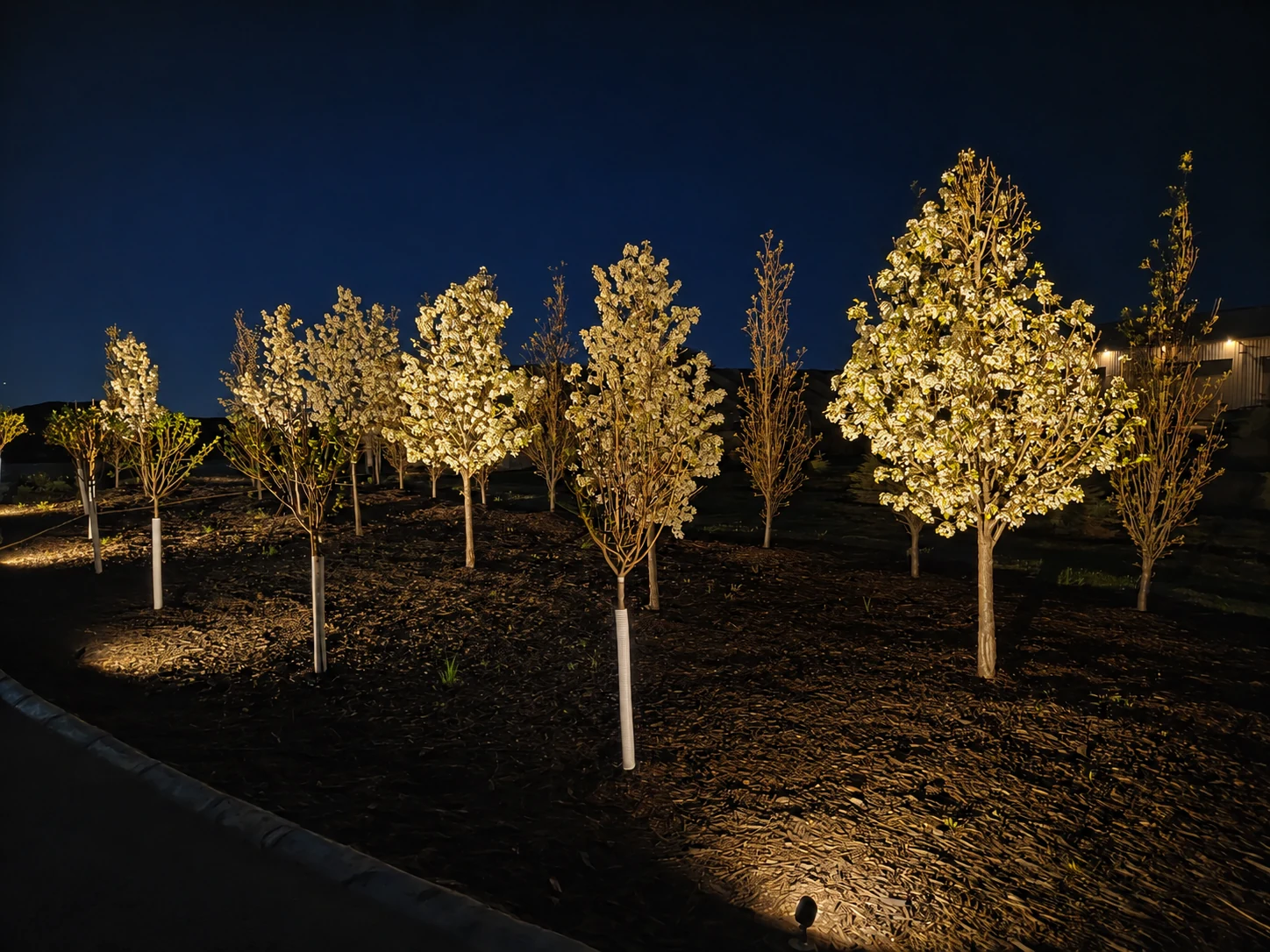
Landscape lighting should do more than make a yard brighter. A professional system improves safety, extends the usable hours of patios and outdoor kitchens, and reveals the structure of the landscape after dark. The best results come from using fewer fixtures thoughtfully rather than placing the same light everywhere.
Earthscape designs and installs low-voltage landscape lighting for homes in Appleton, Neenah, and the Fox Valley. Here is how a coordinated plan can elevate outdoor living.

Begin With Safety and Circulation
Steps, elevation changes, walkways, driveway edges, and entrances deserve priority. Lighting should help people understand where to walk without producing glare. Fixtures must be placed where they are unlikely to be struck by shovels, mowers, or snow-removal equipment.
Use Several Lighting Techniques
A layered system creates depth. Path lights illuminate circulation, downlights can imitate natural moonlight, and accent lights highlight trees, walls, architectural details, or fire features. Under-cap and step lights can be integrated into hardscape. The combination should guide the eye instead of flattening the entire yard with equal brightness.
Highlight Outdoor-Living Features
Paver patios, outdoor kitchens, pergolas, pavilions, retaining walls, and seating areas become more useful when lighting is planned with them. Task lighting belongs near grills and counters, while softer lighting is more comfortable around conversation areas. Planning wiring before construction keeps the finished project cleaner.
Choose Warm, Comfortable Light
Warm-white light generally feels more natural around homes, stone, wood, and plantings. Brightness and beam spread should match the feature. A narrow beam can emphasize a column or tree trunk, while a wider beam may wash a wall or illuminate a canopy. Fixtures should be aimed away from windows and neighboring properties.
Plan for Trees and Plant Growth
Plants change throughout the season and mature over time. A fixture aimed at a young tree may need adjustment as the canopy grows. Snow, mulch, grasses, and shrubs can also block poorly placed lights. Professional installation considers future growth and leaves practical access for aiming and service.
Use Efficient Low-Voltage LED Equipment
Modern low-voltage LED fixtures use less energy than older systems and allow precise control of brightness and beam angle. A correctly sized transformer, quality cable, protected connections, and appropriate voltage at the fixtures are essential for dependable performance. Timers or smart controls can automate the nightly schedule.
Coordinate Lighting With the Landscape Design
Lighting is most effective when it is designed with the hardscape and plantings rather than added as an afterthought. Conduit, sleeves, transformer location, wire routes, and fixture access can be planned before pavers and walls are completed. This reduces disruption and makes future expansion easier.
Maintain the System
Even a quality system needs occasional care. Lenses should be cleaned, plants trimmed away from fixtures, and aims adjusted as the landscape matures. Connections, timers, and damaged fixtures should be inspected periodically—especially after winter or construction work.
What to Expect From Earthscape
Earthscape provides free estimates, and design is included with the landscape projects we build. We can coordinate lighting with patios, outdoor kitchens, retaining walls, fire features, pergolas, and plantings so the entire property feels intentional during the day and after dark.
Ready to make your property safer and more inviting after dark? Contact Earthscape for a free landscape-lighting estimate in Appleton, Neenah, or the Fox Valley.